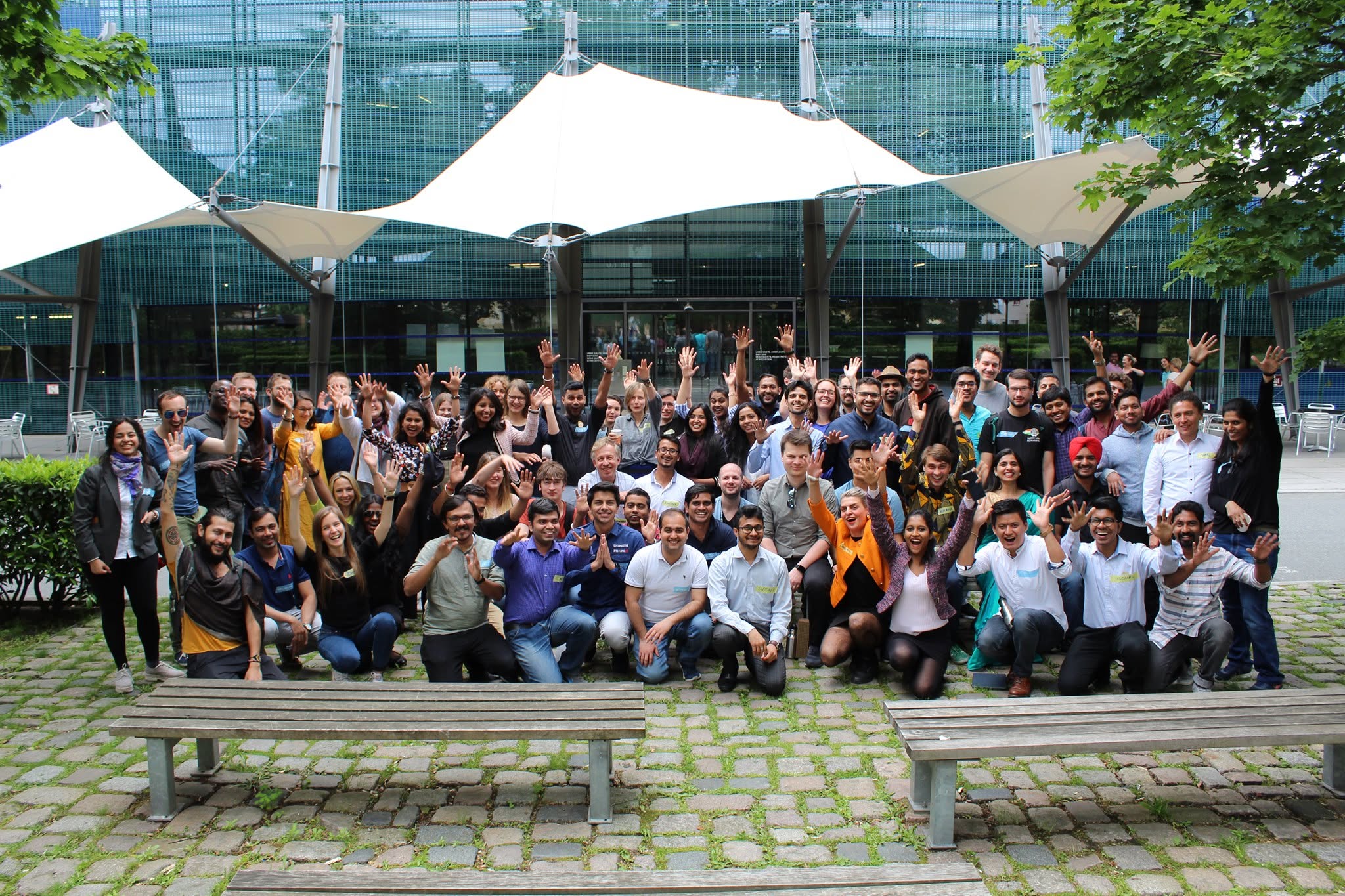
We have been asked, more than once, what the DAAD IndiAlumni Netzwerk actually is. Not what it says about itself on a flyer — what it is made of. So we went and looked at our own member register, stripped out every name and personal detail, and counted.
Ninety-nine active members. Fifty-six towns. Eleven of Germany’s sixteen federal states, plus five members who have moved abroad. That is the whole network, and it is smaller than people expect and more spread out than people expect.
The geography is not where you would guess
The obvious assumption about an Indo-German alumni network is that it lives in Berlin and Munich. It does, partly — Berlin has thirteen members and Bavaria twenty-four, the largest single state. But the more interesting number is the other one: fifty-six towns for ninety-nine people. Most of our members are the only person from this network in their town.
That is worth sitting with. If you did a DAAD fellowship, came back to Germany or stayed on, and settled in Regensburg or Kiel or Darmstadt, the odds are good that you do not know another person who took the same road. The network exists precisely because that experience does not organise itself geographically.
It also tells us something uncomfortable and useful about how we should run events. A monthly meet-up in one city serves the people in that city. An online Stammtisch serves everyone. That is why our monthly Stammtisch is online, on the third Tuesday of every month, and why it will stay that way.
Half the network is still in education
Of the members who told us what they do, the largest groups are students (23) and doctoral researchers (14), with another eleven working in research and academia. Then the picture broadens: ten in business, finance and management; seven in science, engineering and technology; six in consulting and strategy; six in education, culture and the public sector; one lawyer.
So roughly half of this network is at an early stage — mid-degree, mid-doctorate, working out what comes next — and the other half has already been through it. That is not a curiosity. It is the single most actionable fact we have about ourselves, and it points directly at what this association should be doing.
What we are going to do with that
Three things, in order of how quickly we can deliver them.
- Keep the Stammtisch genuinely open. Third Tuesday of the month, 20:00–21:00 CET, online, free, and you do not need to be a member to come. No agenda, no slides. Ask for the link by email or a message on Instagram or LinkedIn.
- Start monthly talks with people from inside the network. With eleven researchers, seven engineers and a room full of doctoral students, we do not need to go looking for outside speakers to have something worth listening to.
- Build a mentoring pairing. The ratio above is almost exactly the one a mentoring programme needs: people a few years ahead, and people who would like to talk to them. We would rather do this properly than announce it early, so we are working out the format first.
And what it means if you are reading this from outside
If you studied, researched or worked across India and Germany — with DAAD funding or without it — this is a small, real, reachable network rather than a large anonymous one. Ninety-nine people is few enough that joining actually changes something, for you and for us.
Membership costs €12 a year as a minimum, and the Stammtisch is free whether you join or not. Write to board@indialumni.org and we will send you the application form.
A note on the data: every figure above is an aggregate drawn from our own member register. No names, addresses or personal details are published anywhere on this site, and none were used beyond counting.